Girl names dads love: a meaning-first shortlist
A dad’s shortlist of girl names that pass the park test, the register and the job application, with what each one means and where it comes from.
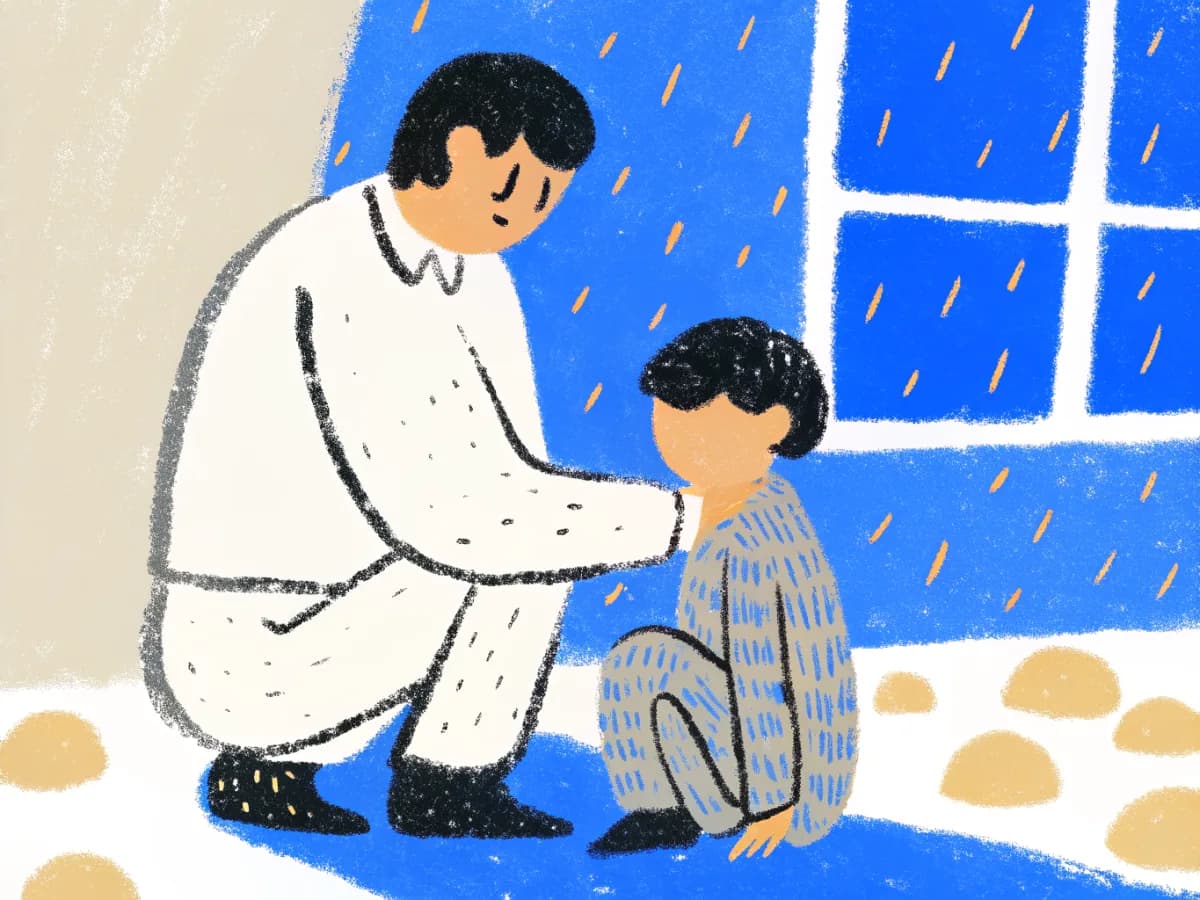
Raising a confident son comes down to a handful of things the research keeps pointing at: name feelings beyond anger, praise effort instead of toughness, model respect, let him struggle and recover, and repair things when you get it wrong. Confidence is not loud. It is a quiet sense that he is capable and that he is loved whether he wins or not.
Raising a son can feel like high stakes and no manual. The good news is that the things that matter most are ordinary and repeatable, and you already have access to all of them. None of this needs a perfect dad. It needs a present, steady one who keeps showing up and is willing to say sorry. Here is what actually moves the needle, in plain terms.
Real confidence in a boy looks calm, not loud. It is the ability to try something hard, cope when it goes wrong, ask for help without shame, and stay kind under pressure. It is not bravado, and it is not never being scared.
We often confuse confidence with swagger. A boy who shouts the loudest, takes the biggest risks or never admits weakness is usually not the most secure one in the room. He is often the most anxious, working hard to hide it. The Child Mind Institute makes this point repeatedly: behaviour that looks like toughness is frequently a cover for distress a boy has not been given the words to express.
Genuine confidence has a few markers worth watching for:
If you see those, you are doing well, whatever the school report says. Those habits predict far more about his adult life than any single grade or trophy.
Name feelings out loud, all of them, and treat them as normal information rather than a problem to fix. Boys are often taught, without anyone meaning to, that anger is the only acceptable emotion. The job is to widen that range so he has words for sad, nervous, disappointed, jealous and overwhelmed too.
Here is the pattern that gets missed. When a boy is hurt or frightened, the feeling underneath often comes out as anger or as silence, because those are the two channels he has been given. A daughter who cries gets comforted. A son who cries sometimes gets told to stop. Over a few years, that quietly trains the crying out and leaves only the anger and the shutdown.
The Harvard Center on the Developing Child describes early relationships as the architecture a child's emotional regulation is built on. The way you respond to his feelings becomes the way he learns to respond to them himself. So your reaction is the lesson, far more than anything you say.
A boy who can say "I'm nervous about the match" is far less likely to act it out as aggression or stomach ache. Naming a feeling literally calms the brain's alarm system. You are not making him soft. You are giving him control.
No. "Toughen up" almost always backfires, because it does not build resilience, it just teaches him to hide the struggle from you. The boy still feels the fear or the hurt. He just learns not to bring it to you next time, and that is the opposite of what you want.
There is a real difference between resilience and suppression, and they look similar from the outside for a while. Resilience is feeling something hard and coping with it. Suppression is pretending the hard thing is not there. Suppression works right up until it doesn't, and the bill tends to arrive in the teen years as anxiety, anger or withdrawal.
What you actually want is for him to know two things at once: that he is capable of handling hard things, and that he never has to handle them alone. Those are not in conflict. The strongest message you can give a son is some version of "this is tough, and you can do tough things, and I am right here."
So instead of "toughen up," try:
He will be plenty tough. Boys who feel safe enough to admit fear are usually the ones who end up able to face it.
Praise the effort, the strategy and the choice, not the talent or the toughness. This is the single most studied finding here, and it comes from Carol Dweck's work on growth mindset. Praising a child for being "clever" or "a natural" makes him more fragile, because the moment something is hard, he assumes he has run out of the fixed thing he was praised for.
It plays out like this. Tell a boy he is brilliant at football, and the first time he plays badly, his identity takes the hit, so he avoids the thing that threatens it. Tell him you loved how he kept passing even when the team was losing, and you have praised something he can repeat on purpose. One builds a brittle boy. The other builds a determined one.
The fix is small and specific:
Notice that none of these are about being the best. They are about the things inside his control: effort, persistence, kindness, courage. Praise those and you teach him that getting better is something he does, not something he either has or hasn't. That belief is the engine of confidence.
There is a respect version of this too. When you catch him being fair, including the kid no one picked, or owning up to something, name it the same way. "That was a kind thing to do, and not the easy thing." Boys remember what their dads choose to notice.
Mostly by living it, because he is watching how you treat people far more than he is listening to what you say about it. Healthy masculinity is not a lecture. It is whether you are respectful to his mum or your partner, how you speak to waiters, whether you say sorry, and how you handle losing. He is taking notes on all of it.
The American Psychological Association, in its guidance on working with men and boys, makes the point that the narrow, traditional script, the one that prizes dominance, stoicism and never backing down, is linked to worse outcomes for boys themselves: more risk-taking, more loneliness, more reluctance to seek help. Healthy masculinity is not the opposite of strength. It is strength with the cruelty taken out.
What it looks like in a son you are raising:
If there is a mother or partner in the picture, your relationship with her is his first and longest lesson in how men treat women. He clocks whether you listen, whether you interrupt, whether you share the load, whether you apologise. You will never sit him down and explain respect as clearly as you demonstrate it across ten thousand ordinary mornings. That is a heavy thing to carry, but it is also the most powerful tool you have, and it costs nothing but attention.
If you want more on the everyday version of showing up, we wrote about it in how to be a present dad. Presence is where most of this actually happens.
Let him do hard things himself, and let him own real jobs that matter to the family. Confidence is built from evidence, and the evidence a boy needs is a track record of having coped, struggled and managed on his own. You cannot give him that by doing things for him. You give it by stepping back far enough that he gets to find out he can.
This is genuinely hard for a loving dad, because watching your son struggle with a shoelace, a tricky bit of homework or a friendship problem pulls hard at you. But every time you jump in to rescue him from something he could have managed, you accidentally send the message that you did not think he could. Do that often enough and he starts to believe it.
A few ways to build it without throwing him in the deep end:
Age-appropriate independence is one of the strongest predictors of a confident, capable adult. You are not pushing him away. You are showing him you believe he is up to it. There is a whole skill in just spending unhurried time together while this unfolds, and we collected some ideas in father and son day out ideas.
Treat failure as normal, expected and useful, and let him see you do the same with your own. A boy's relationship with failure is set largely by how the adults around him react to it. If a bad mark or a lost match is met with disappointment or rescue, he learns failure is dangerous. If it is met with calm curiosity, he learns it is just information.
The aim is not to protect him from ever failing. It is the opposite. A boy who has never been allowed to fail at anything small becomes a teenager terrified of failing at anything big, and that fear shrinks his life. He stops trying things he might not ace. Confidence and a tolerance for failure are the same muscle.
When it goes wrong for him, try this shape:
And model it yourself. When you burn the dinner, miss a turning or mess up at work, narrate it lightly. "Ah well, got that wrong, I'll sort it." A son who watches his dad fail without falling apart learns that failure is survivable, ordinary and no threat to being loved.
Stop trying to make him talk face to face, and create side-by-side time instead. For a lot of boys, the direct "so how are you feeling?" across the kitchen table is the worst possible setup. It feels like an interrogation, and it shuts them down. The talking tends to happen sideways, while you are both doing something else.
There is a reason "the car conversation" is a cliche. No eye contact, a shared focus out of the windscreen, no pressure, an easy exit. The same magic happens kicking a ball, building something, washing the car, walking the dog or playing a game. The activity takes the spotlight off the talking, and that is exactly when the real stuff comes out.
A few things that help him open up:
You are not aiming for one big heart-to-heart. You are aiming for a thousand small, low-pressure moments that add up to him knowing you are a safe place to bring things.
Talk about what his body can do, not how it looks, and watch how you talk about your own. Body image pressure on boys is real and rising, and it tends to run in a particular direction: muscle, size, height, being "big" or "ripped." It gets far less attention than it does for girls, which means it often goes unnoticed until it is a problem.
Boys are soaking up messages from games, social media and the playground about what a male body is supposed to look like, and those messages are getting narrower and more extreme. A boy can absolutely develop a distorted, anxious relationship with his body, and the early version often hides as an obsession with being strong rather than thin.
How to keep him steady:
The goal is a boy who is comfortable in his own skin and does not measure his worth, or anyone else's, by a physique. That comfort starts with the way the men around him talk about bodies, starting with their own.
Repair it. Go back, own your part and say sorry, properly. This is, genuinely, one of the most powerful things you will ever do as a father, and it is the bit most of us were never shown. You will lose your temper. You will be unfair, distracted, too harsh, plain wrong. Every dad does. What separates a son who feels secure from one who does not is very often whether the rupture gets repaired.
The research on relationships is reassuring here: the goal was never to be the dad who never gets it wrong. That dad does not exist, and a boy raised by a flawless robot would learn nothing about how real people handle conflict. The goal is to be the dad who comes back. The repair is the lesson.
A good repair is simple and does not grovel:
When you apologise to your son, you teach him three enormous things at once: that he matters enough to be apologised to, that men can be wrong and own it, and that love survives conflict. That last one is the bedrock of confidence. A boy who knows the relationship can take a knock and recover is a boy who can take risks in the wider world, because he has felt, at home, that he is loved on the bad days too.
None of this requires you to be a different person than you are. It is mostly noticing, naming, stepping back and coming back. You will get plenty wrong, and that is not the failure, that is the job. The dad who keeps showing up, keeps listening sideways, praises the effort and says sorry when he blows it is, by a distance, the dad most likely to raise a confident son. Same principles raise a confident daughter too, and if you have one of each you might like how to raise a confident daughter. Steady and repairing beats perfect every time. Keep going.
Found this useful? We hand-pick indie brands for girl dads, and run our own little shop.
Keep reading
 Guides
A dad’s shortlist of girl names that pass the park test, the register and the job application, with what each one means and where it comes from.
 Guides
A dad’s guide to first phones and social media: trust, privacy, group chats, boundaries and what to do when something goes wrong.
 Guides
A calm, practical dad’s guide to talking with your daughter about puberty: body changes, questions, privacy and when to seek support.